The cryptocurrency market offers opportunities to invest in different digital assets, but it also attracts scammers who create fake tokens to deceive investors. These tokens may look similar to legitimate cryptocurrencies, use copied project websites, display unrealistic profit promises or imitate well-known blockchain projects.
Many investors purchase these tokens without checking their smart contracts, development teams, trading liquidity or token distribution. As a result, they may lose their entire investment when the token turns out to be fraudulent or impossible to sell.
Identifying a fake crypto token before investing is therefore an important part of cryptocurrency research. Although no single test can guarantee that a token is genuine, checking its contract address, blockchain activity, liquidity, project documentation and team information can help identify warning signs.
In this article, we will explain how to identify a fake crypto token, common cryptocurrency scams, important verification tools and precautions to take before purchasing any digital asset.
What Is a Fake Crypto Token?
A fake crypto token is a digital asset created or promoted to mislead investors, imitate a legitimate cryptocurrency or collect money through fraudulent investment schemes.
Scammers may create tokens with names, logos and branding similar to established cryptocurrency projects. They may also advertise these tokens through social media, messaging groups and fake investment websites.
Some fake tokens are designed to attract buyers before their creators suddenly withdraw liquidity or sell a large portion of their holdings.
Common characteristics of fake crypto tokens include:
- Copied project websites and whitepapers.
- Fake development team identities.
- Unrealistic investment return promises.
- Hidden or suspicious smart contract functions.
- Very low or manipulated trading liquidity.
- Concentrated token ownership.
- Fake exchange listings and partnerships.
- Restrictions that prevent investors from selling tokens.
It is important to understand that a newly launched or low-market-cap cryptocurrency is not automatically fraudulent. However, investors should investigate it carefully before committing money.
12 Ways to Identify a Fake Crypto Token Before Investing
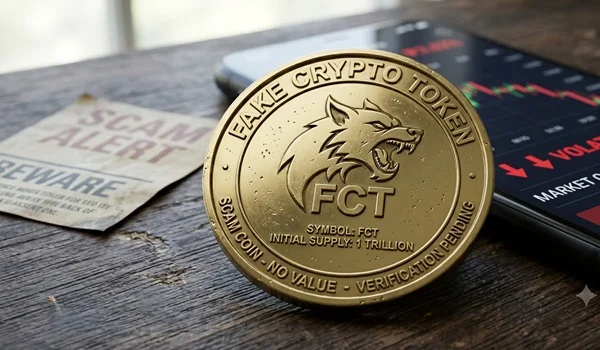
Here are 12 practical checks that can help investors identify suspicious cryptocurrency projects before purchasing their tokens.
1. Verify the Official Smart Contract Address
One of the most important steps is checking the token’s official smart contract address.
Scammers frequently create counterfeit tokens using names and symbols similar to popular cryptocurrencies. For example, a fake token may use a name resembling a well-known project to attract unsuspecting buyers.
A token’s name and ticker symbol are not sufficient proof of authenticity because multiple tokens can use identical or similar names.
Before purchasing:
- Visit the project’s official website.
- Find its verified contract address.
- Check the address against the relevant blockchain explorer.
- Confirm that the token belongs to the correct blockchain network.
- Compare the address with information published through verified project channels.
Never copy a contract address from an unknown Telegram group, random social media post or unsolicited message.
2. Check the Token on a Blockchain Explorer
A blockchain explorer allows investors to examine transactions, token holders, contract information and other on-chain activities.
Depending on the blockchain, useful explorers include:
- Etherscan for Ethereum.
- BscScan for BNB Smart Chain.
- Solscan for Solana.
- PolygonScan for Polygon.
For example, if you are considering purchasing an Ethereum-based token, search for its contract address on Etherscan.
Check the following information:
| What to check | Why it matters |
| Contract address | Confirms which token contract you are examining |
| Transaction history | Shows actual on-chain activity |
| Token holders | Helps identify concentrated ownership |
| Contract verification | Makes the published contract code readable |
| Creator wallet | Helps investigate the deployer’s activity |
| Recent transfers | May reveal unusual token movements |
A verified contract does not automatically mean a token is safe. It only makes the contract’s published source code available for comparison with the deployed contract.
3. Investigate the Development Team
A legitimate cryptocurrency project should provide enough information for investors to understand who is responsible for its development and operations.
Check whether the team members have verifiable professional profiles, relevant technical experience and a history of working on blockchain projects.
Look for:
- Real team member identities, where publicly disclosed.
- Verifiable professional backgrounds.
- Previous blockchain projects.
- Developer activity.
- Public interviews or technical discussions.
- Consistent communication through official channels.
Anonymous development teams are not necessarily fraudulent because some legitimate blockchain projects operate with pseudonymous contributors.
However, anonymity combined with unrealistic promises, hidden token ownership and poor documentation should be treated as a warning sign.
4. Read the Whitepaper and Project Documentation
A whitepaper explains the project’s purpose, technology, token economics and development plans.
Before investing, examine whether the documentation provides clear answers to important questions.
| Whitepaper section | What investors should examine |
| Project purpose | What problem does the project solve? |
| Technology | How does the proposed system work? |
| Token utility | Why is the token needed? |
| Tokenomics | How are tokens distributed? |
| Roadmap | Are development milestones realistic? |
| Security | What security measures are implemented? |
| Team | Who is developing the project? |
Be cautious if a whitepaper contains copied information, vague technical explanations, unrealistic promises or unsupported claims about partnerships.
A professionally designed PDF does not prove that a cryptocurrency project is legitimate.
5. Check Token Distribution and Holder Concentration
Token distribution is another important factor when evaluating a cryptocurrency.
If a small number of wallets control a large percentage of the circulating supply, they may have significant influence over market prices.
For example, suppose a token has 100 million units in circulation, but three wallets collectively hold 70 million tokens.
If these wallets sell substantial quantities, the token price may decline sharply because of increased selling pressure.
Before investing, examine:
- Top token holders.
- Percentage of supply held by major wallets.
- Developer and team allocations.
- Vesting schedules.
- Locked and unlocked token supply.
- Transfers between related wallets.
However, do not automatically classify a token as fraudulent because its largest holders own substantial balances. Exchange wallets, liquidity pools, bridges and treasury wallets can also hold large quantities.
6. Check Whether Liquidity Is Locked
Liquidity determines how easily investors can buy or sell a token.
A suspicious cryptocurrency may attract buyers through social media promotions but have insufficient liquidity to support withdrawals or selling activity.
Some scam projects also remove liquidity after collecting money from investors.
Before purchasing, check:
- Total liquidity available in trading pools.
- Whether liquidity is locked.
- Duration of the liquidity lock.
- Identity of the liquidity provider.
- Whether the liquidity can be withdrawn by the project owner.
- Whether trading volume appears genuine.
Liquidity locks can reduce certain withdrawal risks, but they do not guarantee that a project is safe. A developer may still control other tokens, and some malicious contracts can contain additional harmful functions.
7. Check for Honeypot Tokens
A honeypot token is designed to attract investors into buying a cryptocurrency while restricting or preventing them from selling it.
This is one of the most dangerous types of fake crypto tokens.
For example, an investor may purchase a token through a decentralised exchange. The wallet displays the purchased balance, but every attempt to sell the token fails because of hidden smart contract restrictions.
Warning signs may include:
- Selling restrictions.
- Excessive sell taxes.
- Blacklisted wallet addresses.
- Trading restrictions controlled by the owner.
- Unusual transaction limits.
- Hidden permission-based functions.
Investors can use contract analysis tools and transaction simulations to investigate these risks.
However, automated honeypot checks are not foolproof. A contract may behave differently under certain conditions, and some malicious functions may be difficult to detect.
8. Look for Independent Security Audits
A smart contract audit is an independent technical review intended to identify vulnerabilities and security weaknesses.
Before investing, check whether the project has undergone an audit by a recognised blockchain security company.
Look for:
- The name of the auditing company.
- The original audit report.
- The date of the audit.
- Identified vulnerabilities.
- Whether critical issues were fixed.
- Whether the audited contract matches the deployed contract address.
Be careful with projects that display audit badges without providing an actual report.
An audit also does not guarantee that a token is safe. New vulnerabilities, malicious administrative actions and economic attacks may still create risks.
9. Examine Tokenomics and Supply Distribution
Tokenomics explains how a cryptocurrency’s supply is created, distributed and used.
A suspicious project may allocate a large percentage of tokens to founders, insiders or unknown wallets.
For example, consider a token with a total supply of 1 billion units:
| Token allocation | Percentage |
| Public distribution | 20% |
| Development team | 30% |
| Private investors | 25% |
| Marketing | 15% |
| Project reserve | 10% |
In this hypothetical example, 70% of the supply is allocated outside public distribution.
This does not automatically prove fraud, but investors should investigate vesting schedules, wallet ownership and the possibility of large token unlocks.
Be especially cautious when a project does not explain how its supply is distributed.
10. Check Trading Volume and Market Liquidity
A token may display an impressive market capitalisation but have very little actual trading activity.
Some fraudulent projects use artificial trading volume or coordinated transactions to create the appearance of demand.
Before investing, examine:
- 24-hour trading volume.
- Liquidity available in trading pools.
- Number of genuine trading transactions.
- Buy and sell activity.
- Price impact for different order sizes.
- Differences between reported market capitalisation and available liquidity.
A token with high displayed value but extremely low liquidity may be difficult to sell at the expected price.
Remember that trading volume and holder count can also be manipulated.
11. Investigate Social Media and Community Activity
Fake cryptocurrency projects often use social media to create excitement and encourage investors to purchase tokens quickly.
They may use fake followers, automated comments, paid promotions and fabricated partnership announcements.
Check the project’s presence on platforms such as X, Telegram, Discord and Reddit.
Look for:
- Genuine discussions among community members.
- Technical questions and meaningful responses.
- Consistent development updates.
- Verifiable partnerships.
- Transparent announcements.
- Independent discussions about the project.
A large social media following does not necessarily indicate a legitimate cryptocurrency project.
12. Be Careful With Guaranteed Returns and Urgent Promotions
Guaranteed profits are one of the strongest warning signs of a potentially fraudulent investment scheme.
A cryptocurrency project may claim that its token will increase by 10 times or 100 times within a short period.
Scammers may also use messages such as:
- Buy now before the price explodes.
- Guaranteed 20% monthly returns.
- Limited-time private token sale.
- Exclusive insider investment opportunity.
- Risk-free cryptocurrency investment.
Legitimate cryptocurrency investments carry market and operational risks. No project can reliably guarantee future token prices.
Avoid making investment decisions because of artificial urgency or pressure from promoters.
Best Tools to Check Whether a Crypto Token Is Fake
Investors can use blockchain explorers and specialised security platforms to investigate suspicious tokens.
| Tool | Primary purpose | Website |
| Etherscan | Check Ethereum token contracts and transactions | Visit website |
| BscScan | Investigate BNB Smart Chain tokens | Visit website |
| Solscan | Check Solana token activity | Visit website |
| Token Sniffer | Analyse token contracts and potential scam indicators | Visit website |
| GoPlus Security | Check token security information | Visit website |
| DexScreener | Review DEX prices, trading volume and liquidity | Visit website |
| RugCheck | Examine Solana token risks | Visit website |
These tools provide useful information, but none can guarantee that a cryptocurrency is legitimate or safe. Their findings should be treated as research signals rather than investment approval.
Fake Crypto Token vs Legitimate Crypto Token: Key Differences
The following comparison highlights common differences investors should examine.
| Factor | Potentially fake token | More credible token |
| Contract address | Unverified or copied | Matches official project information |
| Development team | Fake or unverifiable claims | Verifiable background or transparent contributors |
| Whitepaper | Copied or vague | Clear technical documentation |
| Liquidity | Very low or easily removable | More established and transparent liquidity |
| Token distribution | Suspicious concentration | Disclosed allocations and vesting |
| Security audit | Fake or unavailable report | Verifiable independent audit |
| Trading activity | Artificial or suspicious | More consistent market activity |
| Social media | Aggressive promotions and bots | Meaningful community discussions |
| Investment promises | Guaranteed returns | Risks clearly disclosed |
These are general indicators, not absolute rules. A legitimate early-stage project may lack some features, while a sophisticated scam may imitate many of them.
What Should You Do If You Have Already Purchased a Fake Crypto Token?
If you suspect that you have purchased a fraudulent token, take precautions immediately.
- Stop making additional purchases: Do not invest more money to recover your previous losses.
- Avoid suspicious websites: Do not connect your wallet to unknown recovery or migration portals.
- Review token approvals: Check whether you have granted spending permissions to suspicious smart contracts.
- Revoke dangerous approvals: Use the relevant blockchain’s trusted approval-management tools if you identify malicious permissions.
- Protect your wallet: If your seed phrase or private key has been exposed, move remaining legitimate assets to a newly created secure wallet.
- Save transaction records: Keep transaction hashes, wallet addresses, screenshots and communications.
- Report the incident: Contact your exchange or wallet provider and report suspected fraud to the appropriate authorities.
Do not pay anyone who promises guaranteed recovery of stolen cryptocurrency. Blockchain transactions are generally irreversible, and recovery is not guaranteed.
Important Warning Signs of a Fake Crypto Token
Before investing, use this quick checklist to evaluate a cryptocurrency project.
Pre-investment safety checklist
0/10 checked
Official contract address matches the project’s verified source
Token contract has been examined on a blockchain explorer
Development team and project history have been researched
Whitepaper and token utility are clearly explained
Top token holders and supply distribution have been checked
Liquidity and withdrawal restrictions have been examined
Smart contract permissions and selling restrictions have been checked
Independent security audit has been verified, if claimed
Trading volume and market activity appear credible
No guaranteed returns or high-pressure promotions
Reset checklist
Frequently Asked Questions (FAQs)
How can I check whether a cryptocurrency token is real or fake?
Check its official contract address, blockchain explorer information, liquidity, holder distribution and project documentation. Compare the contract address with the one published by the official token issuer.
Can a fake crypto token appear on CoinMarketCap or CoinGecko?
Yes. A token appearing on a cryptocurrency tracking platform does not automatically prove that it is legitimate or safe. Always verify its contract address and investigate the project independently.
What is a honeypot crypto token?
A honeypot token is designed to allow investors to purchase tokens while preventing or restricting them from selling. Such tokens may contain hidden smart contract restrictions or excessive selling fees.
Is a verified smart contract safe to invest in?
No. Contract verification makes the source code publicly readable, but it does not guarantee that the code is secure or that the project is genuine. Investors should also examine contract permissions, liquidity and ownership distribution.
Can fake crypto tokens steal money from my wallet?
Yes. Some fraudulent tokens are designed to trick investors into approving malicious transactions or interacting with harmful websites. These interactions may expose wallet assets or grant unauthorised spending permissions.
What is a rug pull in cryptocurrency?
A rug pull is a cryptocurrency scam in which project creators attract investors and then withdraw liquidity, abandon the project or otherwise remove the value supporting the token, leaving investors with losses.
Should I invest in a newly launched cryptocurrency?
Newly launched cryptocurrencies can offer opportunities, but they generally have limited trading history and less established security records. Research the team, contract, tokenomics and liquidity carefully before investing.
Can I recover money invested in a fake crypto token?
Recovery is difficult and not guaranteed. If the token has no liquidity or its smart contract prevents selling, you may be unable to recover your investment. Report suspected fraud and preserve all transaction records.
Conclusion
Identifying a fake crypto token before investing requires more than checking its price, market capitalisation or social media popularity. Investors should investigate the official contract address, smart contract permissions, development team, tokenomics, liquidity and trading activity.
Blockchain explorers and security analysis platforms can help identify suspicious behaviour, but no tool can guarantee that a token is completely safe.
The best approach is to conduct independent research, avoid guaranteed-return schemes and never invest money simply because of social media hype.
Remember: A cryptocurrency can have an attractive website, thousands of followers and a rising price while still being fraudulent. Verify the token before investing, not after losing money.
Disclaimer: This article is for educational purposes only and does not constitute financial or investment advice. Cryptocurrency investments involve substantial risks, including the possibility of losing your entire investment.